The meaning of TY in chat is simple: it stands for “thank you.” People use this short form in text messages, WhatsApp chats, and social media comments to show quick appreciation without typing the full phrase. It is friendly, polite, and saves time, which is why it appears so often in everyday online conversations. .
TY is used in many situations, such as replying to a helpful message, thanking a friend for a gift, or responding to a compliment on Instagram. For example, “TY for the help!” or “Got it, ty!” are common uses. You can also write “TYSM” (thank you so much) or “TYVM” (thank you very much) to sound more grateful. While TY works well in casual chats, it is better to write “thank you” in formal emails or professional messages.
The Literal Meaning of TY
The literal meaning of TY is “thank you,” one of the most common abbreviations used in texts, chats, and social media comments. People type TY to show quick appreciation without writing the full phrase, which saves time in fast conversations on platforms like WhatsApp, Instagram, and Snapchat. It sounds casual and friendly, so it works best with friends, classmates, and online followers rather than in formal emails. Understanding the meaning of TY helps you reply politely and keep your online communication clear and respectful.
The Fast-Typing Meaning of TY
TY is a fast-typing abbreviation that stands for “thank you,” and it is one of the most common shortcuts used in texts, chats, and social media comments. People use it to save time while still showing politeness and appreciation. You will often see TY on platforms like Instagram, WhatsApp, and Discord, where quick replies matter. Understanding the meaning of TY helps you communicate clearly and keep up with modern online conversations.
The Friendly Appreciation Meaning
The friendly appreciation meaning refers to showing genuine gratitude and kindness toward someone in a warm, polite way. It goes beyond a simple “thank you” by recognizing a person’s effort, support, or character, which helps build trust and stronger relationships. Whether in daily conversations, workplace messages, or social media comments, friendly appreciation makes people feel valued and respected. Understanding its meaning and using it sincerely can improve both personal and professional connections.
Read More This : bffr meaning
The Professional Courtesy Meaning
The professional courtesy meaning refers to the polite, respectful, and considerate behavior people show each other in a work environment. It includes simple actions like being punctual, replying to emails on time, listening without interrupting, and treating colleagues with respect. Practicing professional courtesy builds trust, improves teamwork, and creates a positive workplace culture. .
The Minimal-Effort Response Meaning
The minimal-effort response meaning refers to a short, low-energy reply like “k,” “sure,” or “fine” that shows little interest or effort in a conversation. People often use it when they are busy, bored, or simply not in the mood to talk. In texting and social media, however, such replies can sometimes come across as cold or dismissive, so understanding the tone behind them helps avoid misunderstandings.
What Does TY Mean in Text?
TY means “thank you” in nearly every context you’ll see it. What changes is the tone, based on:
- Capitalization (“ty” vs. “TY”)
- Punctuation (“ty!” vs. “ty.”)
- Emojis attached
- The conversation around it
Examples
- “ty for the ride!” — casual, friendly
- “TY so much, you saved me” — enthusiastic
- “ty.” — short, possibly rushed or flat
TY Full Form and Definition
TY stands for “Thank You” and is classified as an internet abbreviation or initialism. It is used in the same way across texting, gaming, and social media, which makes it one of the most recognized and widely understood shorthand terms online. People use TY as a quick and polite way to show appreciation when someone helps them, shares useful information, or sends a kind message. In fast-paced chats and online games, where typing full sentences takes extra time, TY saves effort while still keeping the tone friendly and respectful.
Other Possible TY Meanings
Outside of texting, “TY” can occasionally refer to:
- A person’s initials in casual conversation
- “Thank You” in formal writing, though rarely abbreviated there
- Ty, a common short form of names like Tyler or Tyrone (context-dependent, unrelated to gratitude)
What Does TY Stand For in Slang?
TY is a common slang abbreviation that stands for “thank you.” People use it in texts, chats, and social media comments as a quick and polite way to show gratitude. For example, you might reply “TY!” when a friend helps you or compliments your post. Understanding what TY stands for in slang makes online conversations faster, friendlier, and easier to follow.
Is TY Rude, Offensive, or Neutral?
TY is neutral by default and never inherently rude. Tone shifts its feel.
When It Feels Appropriate
- Quick replies to small favors
- Casual chats with friends or online communities
- Comment sections and DMs
When It May Feel Too Casual
- Formal emails or job-related communication
- Serious or emotional conversations, where a full “thank you” feels more sincere
- First-time interactions with someone unfamiliar with texting shorthand
Where Is TY Commonly Used?
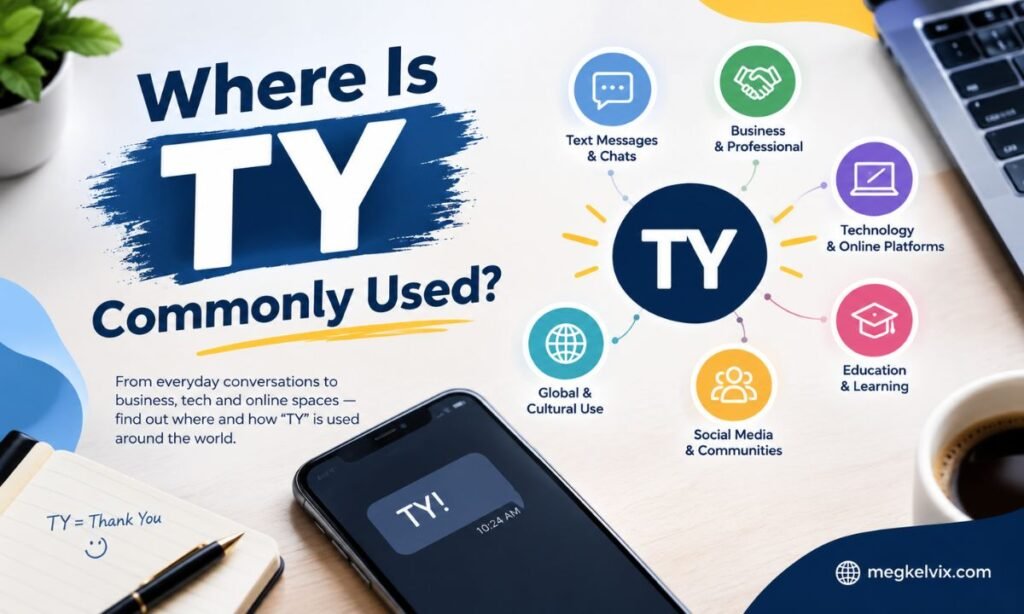
Text Messages
Everyday replies to favors, help, or small gestures.
Social Media
Common in comments and captions thanking followers or friends.
Gaming
Used constantly in multiplayer chat to thank teammates for an assist, item, or good play.
Online Communities
Forums and Discord servers use TY to quickly acknowledge help or advice.
Why People Use TY
- Speed: faster to type than “thank you”
- Habit: widely recognized, so no explanation needed
- Casual tone: fits informal digital conversation
- Universality: understood across platforms and age groups
Similar Meanings and Related Slang Terms
Comparison Table of Similar Slang
| Term | Meaning | Formality |
| TY | Thank you | Casual |
| TYSM | Thank you so much | Casual, more enthusiastic |
| THX | Thanks | Very casual |
| TYVM | Thank you very much | Casual, slightly more formal tone |
| TYTY | Thank you, thank you | Casual, repeated for emphasis |
TY vs TYSM
TY
A quick, simple thanks — fine for small favors or routine replies.
TYSM
Adds “so much,” signaling stronger, more heartfelt appreciation.
TY vs THX
Both are casual, but “THX” tends to feel even more clipped and informal, often used in very quick exchanges like gaming chat.
Related Slang With Similar Meaning
- Thanks — the standard, semi-casual version
- Cheers — common in British and Australian English
- Appreciate it — a fuller, still casual alternative
- TQ — a shorter, less common variant of “thank you”
Real-Life Examples of TY Usage
Friendly Tone
“TY for helping me move this weekend, you’re the best!”
Casual Tone
“ty, got it”
Argument or Tense Context
“ty for finally admitting it.” (Here, tone can turn sarcastic depending on what preceded it.)
Gaming Context
“ty for the heal!”
Social Media Context
“TY everyone for 1k followers!! 🎉”
WhatsApp Conversation
Ali: Sent you the file.
Sara: ty!
Instagram DM
Comment reply: “ty so much for this 🥹”
TikTok Comments
“ty for explaining this so clearly”
Group Chat
“ty for organizing everything, saved us so much time”
Origin and Background of TY
TY grew out of early internet and instant-messaging culture, alongside other short abbreviations like “LOL” and “BRB.” As typing speed became valuable in chatrooms, forums, and later texting, shortening common phrases became standard practice. “Thank you” was an obvious candidate, since it’s used constantly across nearly every kind of conversation.
Is TY Safe for Social Media?
Yes. TY is one of the most universally understood and accepted abbreviations online, appropriate for comments, captions, and casual replies across nearly all platforms and age groups.
Common Misunderstandings & Misinterpretations
Assuming TY Is Rude
It isn’t by default. Most people read it as a normal, casual thanks.
Assuming TY Shows High Enthusiasm
A plain “ty” is closer to a polite acknowledgment than an enthusiastic thank-you. For stronger feeling, people usually add emojis, exclamation points, or switch to “TYSM.”
Ignoring Punctuation Clues
A period after “ty” can feel more clipped than “ty!” or “ty :)”
Missing Sarcasm
Like any short reply, TY can be sarcastic in the right context — usually signaled by the message right before it.
When to Avoid Using TY
Professional Emails
Spell out “thank you” for a more polished, respectful tone.
Serious Situations
When someone goes out of their way for something meaningful, a full sentence of thanks feels more genuine.
Formal Requests
Job applications, official inquiries, or customer service messages read better with complete phrasing.
Polite Alternatives to TY

- “Thank you so much”
- “I really appreciate this”
- “Thanks a lot, that means a lot to me”
- “I’m grateful for your help”
Impact of Using Slang in Communication
Positive Effects
- Speeds up casual conversation
- Feels natural and friendly among peers
- Universally recognized, so there’s little confusion
Possible Downsides
- Can feel impersonal in emotional moments
- May seem too casual in professional contexts
- Tone can be misread without emojis or punctuation cues
Multiple Meanings of TY Depending on Context
| Context | Likely Meaning |
| Casual chat | Friendly thanks |
| Gaming | Quick acknowledgment |
| Work chat | Polite, efficient thanks |
| Sarcastic exchange | Not genuinely grateful |
Regional & Cultural Usage
Western Culture
TY is standard in US, UK, Canadian, and Australian texting and social media.
Asian Culture
Common in English-language chats across Asia, often alongside region-specific gratitude phrases.
Middle Eastern Culture
Used in English-language digital communication, often alongside local-language thanks in mixed-language chats.
Global Internet Usage
Because it’s short and simple, TY has spread widely across international online communities that communicate partly or fully in English.
Read More This : what does idm mean in text
Generational Differences
Gen Z
Uses TY constantly, often alongside emojis or paired with TYSM for emphasis.
Millennials
Comfortable with TY, often switching between it and full “thank you” depending on context.
Older Generations
More likely to spell out “thank you,” though increasingly familiar with TY through texting and social media.
Why TY Is So Popular
- It’s short and effortless to type
- It’s instantly recognizable across platforms
- It fits both casual and semi-professional digital tone
- It works in nearly every context where gratitude is needed
Conclusion
TY is one of the simplest, most widely understood pieces of internet shorthand — a quick stand-in for “thank you” that fits texting, gaming, and social media alike. Its meaning rarely changes, but its warmth does, shaped by punctuation, emojis, and the conversation around it. For quick, casual thanks, TY works perfectly. For anything more formal or heartfelt, spelling it out still goes a long way.
FAQ’s
How do I respond to TY?
A simple “you’re welcome,” “np” (no problem), or “anytime!” works well as a reply to TY.
What does TY mean in texting?
TY means “thank you,” used as a quick, casual way to express gratitude.
What does ty lol mean?
It usually means a lighthearted, casual thanks, often used when something was funny or mildly embarrassing.
What does TY mean in texting?
TY simply stands for “thank you” across nearly all texting and social media contexts.









1 thought on “What Does “TY” Mean in Chat? Meaning & Usage Guide ”